Can I install a new circuit breaker myself
Yes, you can install a new circuit breaker yourself, provided you have the necessary tools, knowledge of electrical systems, and adhere to safety protocols. This article will guide you through the process, ensuring that you address the essential factors involved in the installation.
Understanding circuit breakers
Circuit breakers are crucial safety devices designed to halt the flow of electricity in the event of an overload or short circuit. They protect your home’s wiring and appliances from damage, and their installation and maintenance are integral to household safety. Before proceeding with installation, it’s beneficial to familiarize yourself with different types of circuit breakers available.
Assessing your electrical panel
Before attempting any installation, assess your existing electrical panel. Determine if the panel has space for an additional breaker and whether it is rated to handle the load. Panels typically come in varying ampacity, such as 100, 200, or 400 amps. A professional can help you assess the panel’s condition and load capacity, ensuring it can support another breaker.
Necessary tools and materials
Gathering the right tools and materials is pivotal for a successful installation. Tools typically include a voltage tester, screwdriver set, wire cutter, and a pair of pliers. Additionally, you’ll need a compatible circuit breaker suited for your panel. Ensure that you choose the correct amperage for the breaker, typically ranging from 15 to 60 amps for standard home use.
Safety first: Personal protective equipment
Your safety should be a top priority when working with electrical systems. Wear appropriate personal protective equipment (PPE), such as insulated gloves and goggles, to minimize risk. Always turn off the main power supply before accessing your electrical panel to prevent shock. Understanding the importance of safety measures can’t be overstated when working on electrical systems.
Step-by-step guide to installing a new circuit breaker
The following step-by-step instructions will help you install your circuit breaker effectively:
- Turn off the main power supply to the electrical panel to avoid any electrical hazards.
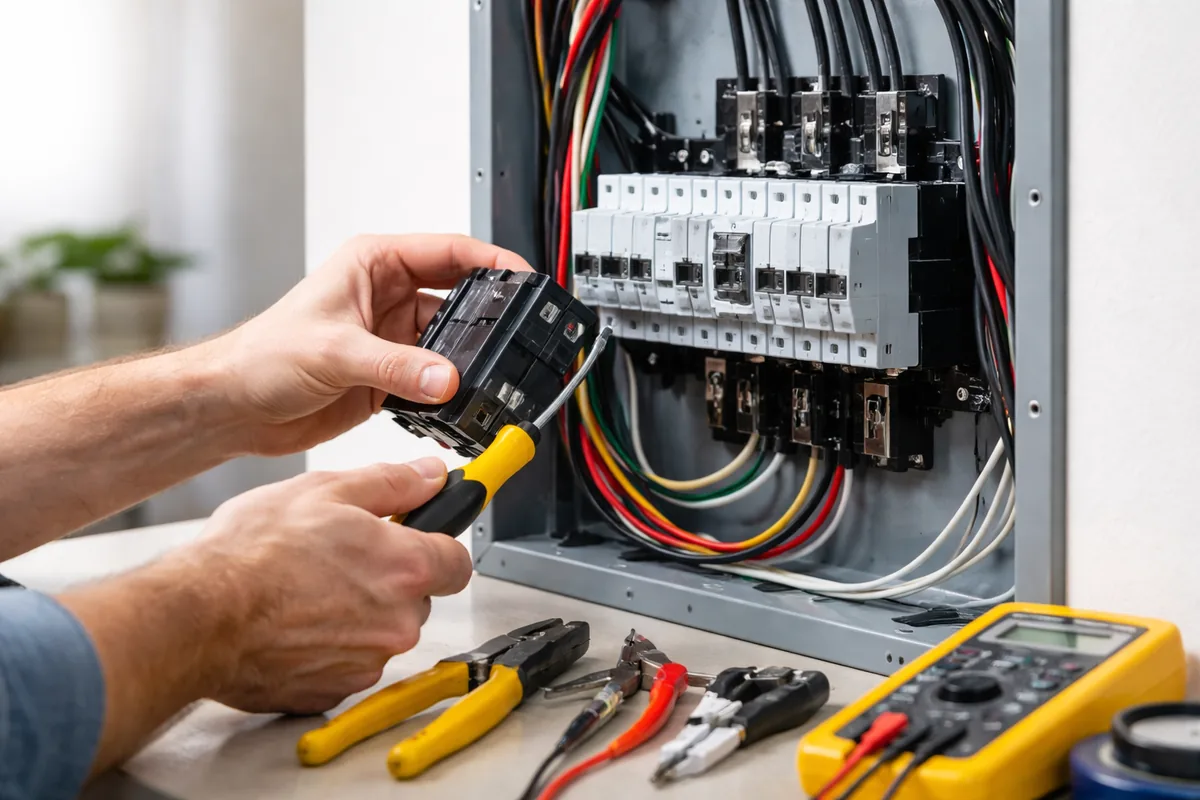
- Remove the panel cover using a screwdriver to expose the circuit breaker slots.
- Identify an empty slot for your new breaker and verify its compatibility with the panel.
- If applicable, remove the old breaker by unscrewing it and gently pulling it out.
- Insert the new breaker into the vacant slot, ensuring it’s securely attached and aligned properly.
- Attach the wire from your circuit to the new breaker’s terminal, tightening it securely.
- Replace the panel cover and ensure all screws are fastened securely.
- Turn the power back on at the main switch and test the new circuit breaker with a voltage tester.
Common mistakes to avoid
When installing a circuit breaker, avoid common pitfalls that can lead to faulty installations or safety hazards. Here are a few vital mistakes to steer clear of:
- Not turning off the main power before beginning work, which can lead to electrical shock.
- Using a breaker that is not compatible with your electrical panel.
- Inadequate tightening of wires leading to poor connections or heat build-up.
- Neglecting to replace the panel cover correctly, exposing live wires.
- Failing to follow local codes and regulations, which can result in unsafe conditions or fines.
When to consult a professional
While DIY installations can save you money, certain scenarios necessitate professional intervention. If you encounter any of the following situations, it is best to consult a licensed electrician:
- If you're unsure about the electrical load or compatibility of the new breaker.
- If the circuit breaker trips frequently, indicating a more significant issue in your electrical system.
- If you have old wiring or an outdated electrical panel.
- If you feel uncomfortable or lack the necessary experience to execute the installation safely.
Cost considerations for DIY installation
When installing your circuit breaker, consider the costs associated with the tools, materials, and any potential costs for hiring an electrician if needed. A standard circuit breaker typically costs between $5 and $20, depending on the amperage and brand. Additionally, basic tools, if not already owned, can range from $50 to $150. By weighing these factors, you can decide if a DIY approach is beneficial for your situation.
Table of typical circuit breaker types
| Type of circuit breaker | Amperage range | Usage |
|---|---|---|
| Standard circuit breaker | 15-60 Amps | General lighting and outlets |
| Double-pole circuit breaker | 30-60 Amps | Heavy appliances (e.g., dryers, HVAC systems) |
| Ground fault circuit interrupter (GFCI) | 15-20 Amps | Wet locations (e.g., kitchens, bathrooms) |
Planning for future needs
Installing a new circuit breaker may open up new possibilities for future electrical needs. When you add new electrical devices or appliances, it may require additional circuits to prevent overloads. Planning ahead allows your electrical system to adapt and safely handle your growing requirements. Consider keeping the panel well organized and updated for easy access and efficient energy distribution.
FAQ
Can I install a circuit breaker without electrical experience?
While it's possible to install a circuit breaker without prior experience, it carries risks. Being familiar with electrical systems and safety measures is crucial.
How can I tell if my circuit breaker needs to be replaced?
Signs include frequent tripping, visible damage, or older breakers that may not meet current electrical codes.
What are the risks of installing a circuit breaker incorrectly?
Incorrect installation can lead to electrical shocks, fires, or damage to your home’s electrical system.
Is it necessary to turn off the main power supply during installation?
Yes, turning off the main power is crucial to prevent electrical shock and ensure safety during installation.
Can I replace a circuit breaker with a different amperage?
Only replace a breaker with one of the same amperage unless your electrical panel has been evaluated and upgraded to handle a different load.